

Deshedding Tools for Dogs: Which Products Actually Reduce Shedding
Managing Shedding Is One of the Most Common Grooming Challenges
Dog hair on every surface of your home is a nearly universal experience for double-coated breed owners. Huskies, German Shepherds, Golden Retrievers, Labradors, Bernese Mountain Dogs, and many other beloved breeds shed year-round, with two dramatic seasonal shedding periods ("blowing coat") in spring and fall when the undercoat is shed in quantities that seem implausible for a single animal. The right tools make a significant difference in how much of that hair stays on the dog versus ends up on your couch.
Understanding the Double Coat
Double-coated breeds have a soft, dense undercoat and a longer, coarser topcoat (guard coat). The undercoat is what sheds — constantly losing individual dead hairs that, without intervention, accumulate on the surface of the topcoat and eventually fall throughout your home. Effective deshedding removes this dead undercoat before it sheds off naturally.
Deshedding Tools That Actually Work
Undercoat Rakes
These tools have long, widely-spaced teeth designed to penetrate the topcoat and pull out dead undercoat. They're among the most effective tools for heavy shedders and are gentler on the skin than slicker brushes when used correctly. Look for rakes with rotating teeth, which are much less likely to scratch the skin than fixed-tooth versions. Best for: Huskies, German Shepherds, Malamutes, and other heavy double-coated breeds.
The Furminator and Similar Deshedding Blades
The Furminator is a blade-based deshedding tool with a fine-toothed stainless steel edge that catches dead undercoat. It's extremely effective at removing shed hair and very popular for good reason. The caveat: used too frequently or with heavy pressure, it can damage the topcoat over time. Use once a week at most during shedding season, not daily. Not appropriate for curly or single-coat breeds. Best for: Labs, Golden Retrievers, medium-coated double-coated breeds.
Rubber Curry Brushes and Grooming Gloves
These tools use rubber nubs or bristles to massage the coat and loosen dead hair. They're gentler than bladed tools and most dogs enjoy them (the sensation is similar to a massage). Most effective as a follow-up to an undercoat rake or Furminator rather than as a standalone tool for heavy shedders. Very effective for short-coated dogs (Labs, Boxers, Beagles) where they can reach the skin surface easily.
Slicker Brushes
Fine, angled metal pins on a padded base. Most useful for detangling and surface grooming rather than undercoat removal. Better suited for single-coated or silky-coated breeds than for heavy double-coated shedders. Can cause brush burn (skin abrasion from repeated passes) if used with heavy pressure on the same area.
Bathing as a Deshedding Strategy
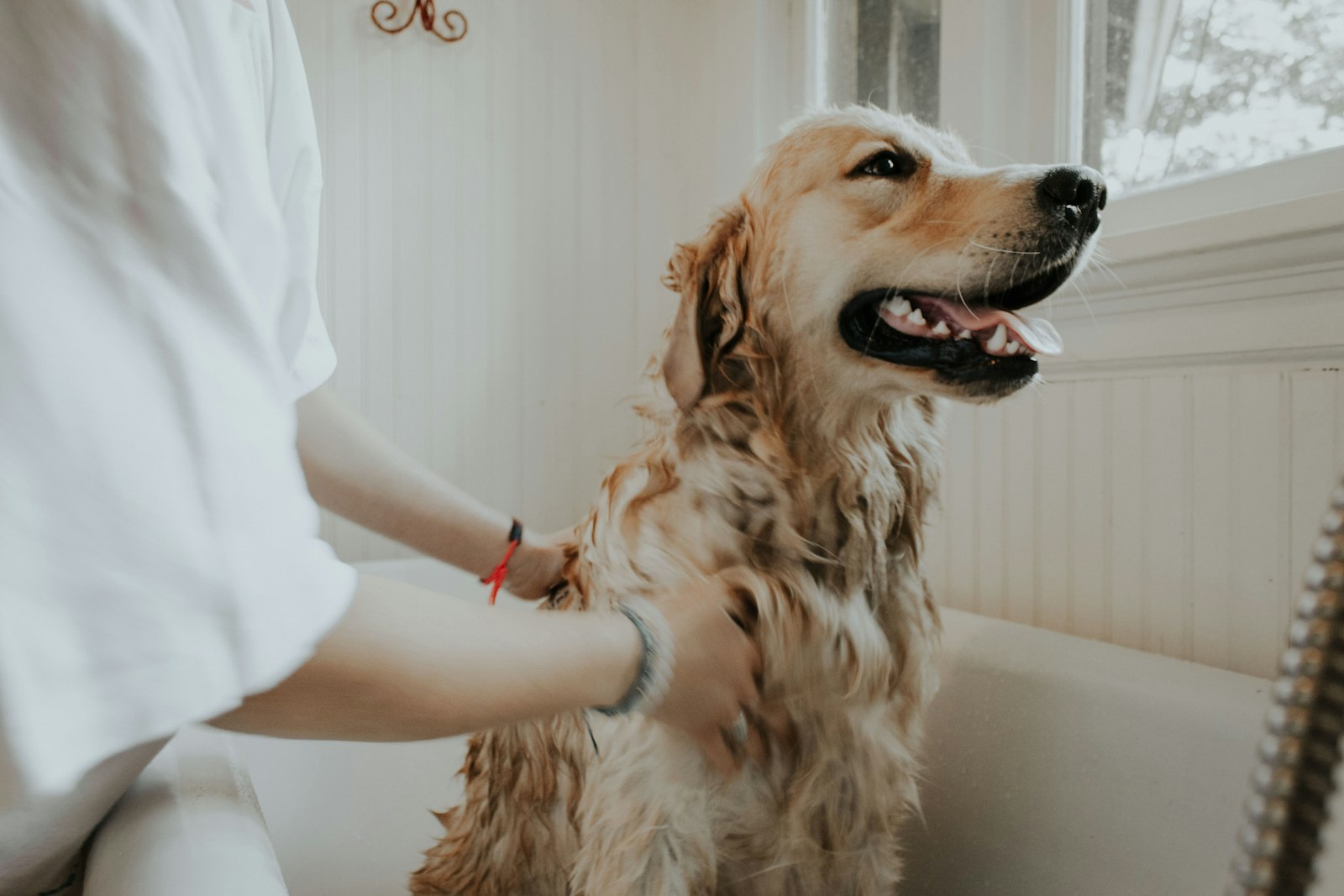
One professional bath with force-drying (a high-velocity dryer that blows loose coat out) can remove more dead undercoat than weeks of brushing at home. Professional "deshedding treatments" that include bathing, conditioning, and force-drying are worth the cost 2-3 times per year for heavy shedders.
What Doesn't Help
Diet changes, supplements, and shampoos marketed for reducing shedding have limited evidence for actually reducing the rate of hair loss. Shedding is largely driven by photoperiod (day length), genetics, and hormones — not primarily by nutrition in dogs that are otherwise healthy and well-fed. The only reliable strategy is removing dead hair before it falls out naturally.